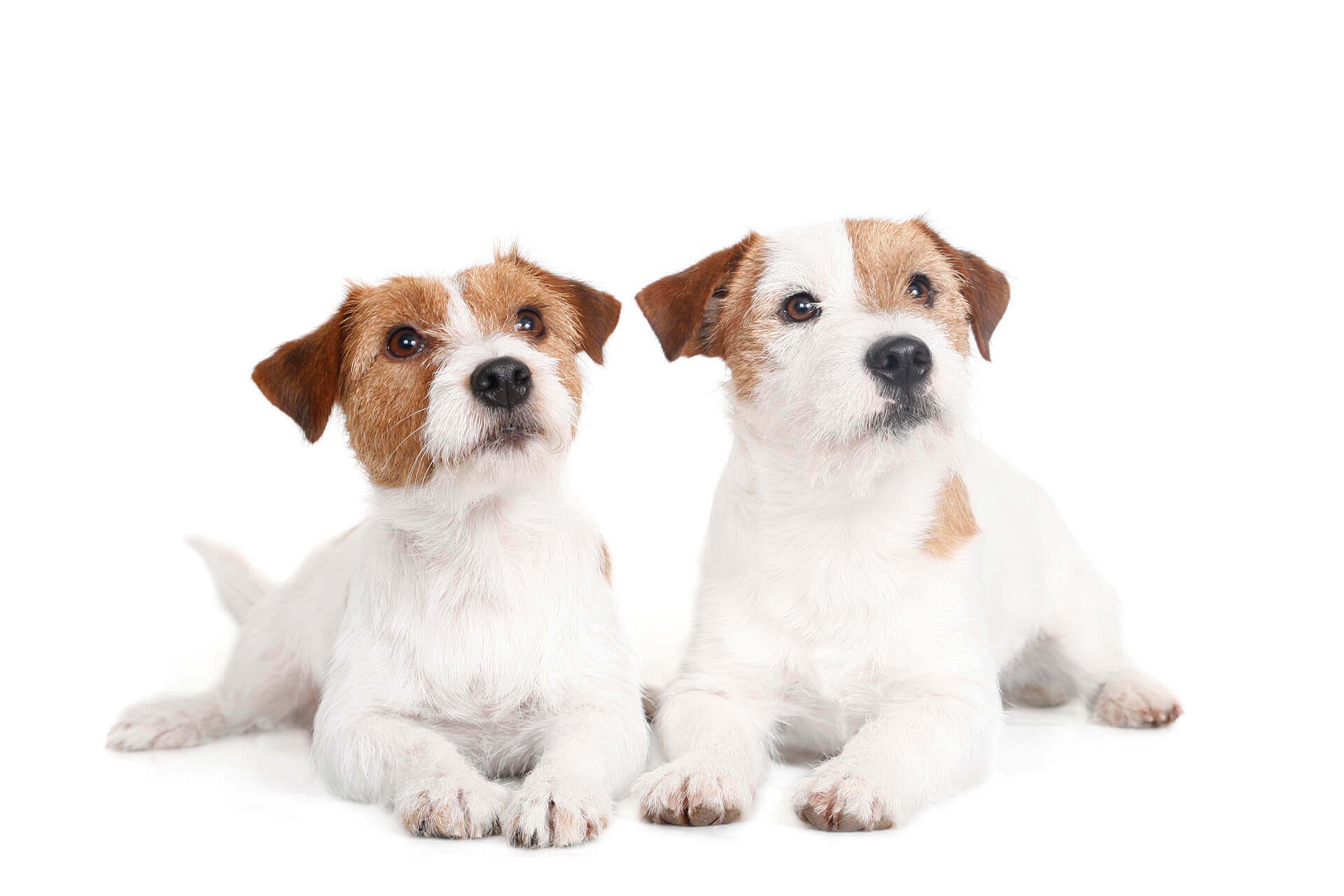
The Jack Russell
The Jack Russell Terrier is widely bred in the Netherlands today. Less selective crosses, and crosses with other (terrier) breeds, have in recent years produced a terrier in many variations. There are Jack Russells that look like a spotted dachshund, and Jack Russells that stand much higher on their legs with a more compact body. Both can have a height at the withers of, say, 28 cm (it must be between 25 and 30 cm). All of this goes under the name Jack Russell.
Indoors the Jack Russell is a sociable dog that loves to sit on your lap or simply be part of things. They are very loyal to their family and get on well with children, especially if they have grown up with them. Outdoors the Jack Russell is a true hunting dog. They often have a natural drive and talent for hunting. They will chase anything with fur or feathers, whether that is a mouse, a rat or the neighbours’ cat, and whatever they catch, they will try to kill. With a thorough upbringing this hunting can of course be kept within limits, but it is part of the Jack Russell’s character: after all, he has always been a hunting dog.
A Jack Russell is extremely active. A healthy Jack Russell in good condition is practically tireless. A Jack Russell kept as a house dog needs a lot of exercise; a single walk around the block won’t satisfy him. A dog that can’t let off steam outside will do so inside.
Jack Russells are very alert and will bark regularly. If you don’t want this, you need to limit it from an early age. They are also avid diggers, with no respect whatsoever for your neatly laid-out flower bed.
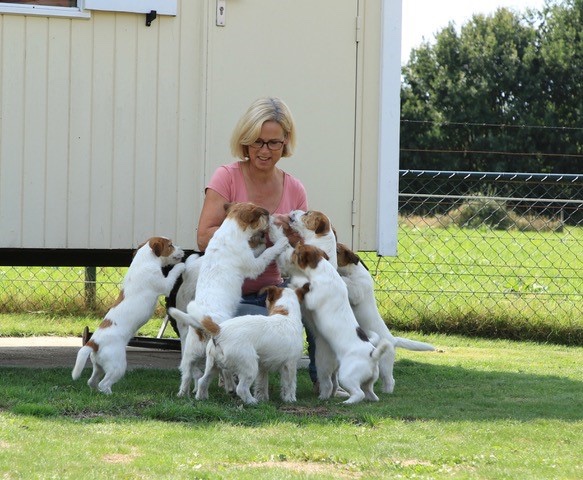
As you can see, the Jack Russell is a dog with real character. They can be very headstrong and are exceptionally clever, so they need a very consistent upbringing. Remember that some behaviour may be cute in a puppy but unwanted in an adult dog (walking on the table, chasing the chickens, and so on).
But do give your Jack Russell the chance to be a dog, too. You shouldn’t ‘humanise’ him. A Jack Russell is a big dog in a small package: what isn’t small about him is his character, his teeth and his courage. They are fearless and really aren’t afraid of the big, nasty dog across the road. They are quite feisty, and you must always keep that in mind. On the whole they are real ‘rascals’, always ready for an adventure. Through play you can quickly teach him what is expected of him.
Jack Russells can stay fit and active well into old age. Ages of 15 or 18 years are not unusual, so taking on a Jack Russell is usually a long-term commitment.
Patellar luxation (loose kneecaps) is a condition found in many small terrier breeds. If you buy a puppy through the breed club’s puppy information service, both parents have been examined for patellar luxation and must be free of it.
The Jack Russell comes in three coat types: smooth, broken and rough. Put simply, a broken coat sits between smooth and rough. According to the standard, the Jack Russell must be predominantly white with tan, black or tricolour markings. White and white/lemon are also allowed. Brindle markings are undesirable. Partly taken from the breed club’s leaflet.